Entries by Cohera-Tech

The future of bricks and mortar is experiential | MOF26

Retail isn't dying. It's just getting interesting again.

Last week, our team spent three great days at the Malls of the Future Summit — on our feet, talking to mall operators, retailers, and just about anyone who'd let us corner them near the coffee queue.

We came away genuinely energised. Not only in a "great networking event" way. In a "the mall industry is actually at an inflection point and we want to be part of it" kind of way.

Here's what stood out.

People are finally talking about staying, not just arriving

For years, one of the standard measures of a mall's performance was footfall. How many people came through the door? It's a very important number, but we always wanted to add more — like judging a restaurant by how many people look at the menu outside .

What we heard at Malls of the Future was a genuine shift in how operators are thinking. The conversation has moved from counting to understanding. How long did someone stay? Where did they go? Did they come back? These are the questions that actually tell you whether your space is working.

Dwell time isn't just a feel-good metric. For a mall, it's the difference between a visit that turns into one purchase and a visit that turns into three. For a retailer, it's the difference between someone glancing at a window display and someone who stays long enough to actually buy something. The industry knows this. What's exciting is that the tools to measure it properly are finally catching up.
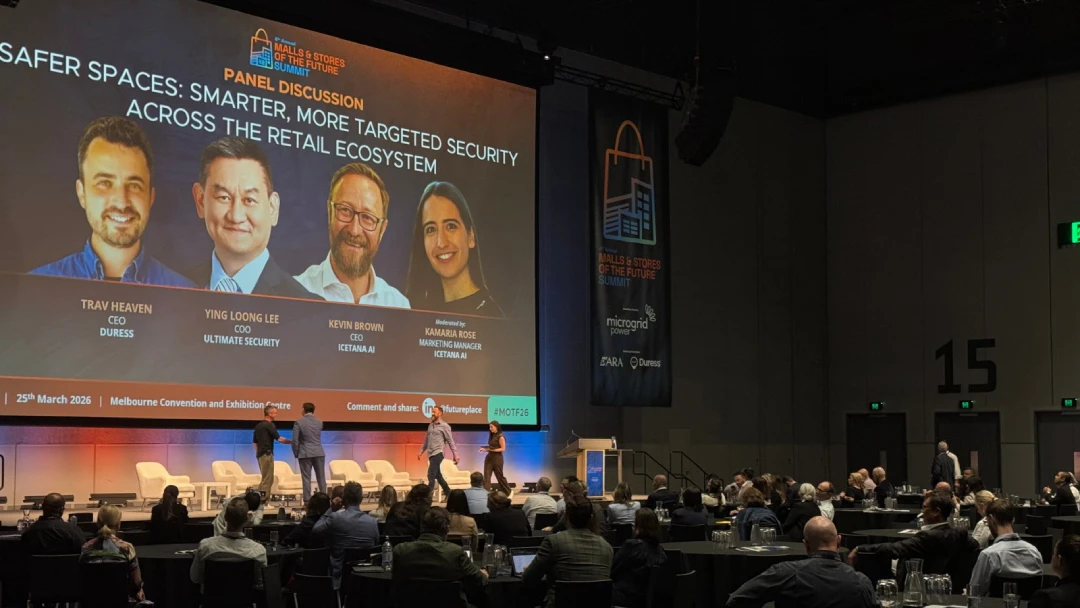
Panel discussion screen at a retail industry conference showing a presentation with a live audience.

The best retailers are redesigning around their customer, not their product

One of the standout presentations of the conference came from Reid Nakou at The General Store, who made a compelling case that the purpose of a physical retail space has fundamentally changed. It's no longer primarily about shifting product. It's about creating somewhere people actually want to be.

That sounds like marketing fluff until you see the data behind it. Baby Bunting is a good example. New leadership came in, looked at their stores, and asked their customers what they actually thought. The feedback was blunt: too noisy, too much, too hard to find what you need.

So they stripped it back. Cleaner zones. Less clutter. A store designed around the specific experience of being pregnant or a new parent — which is to say, often tired, often overwhelmed, and not in the mood for decision paralysis. The result? Sales up 25–30% in the redesigned stores. Dwell time up significantly.

It's a simple idea executed really well: understand who your customer actually is, then build the space around them.
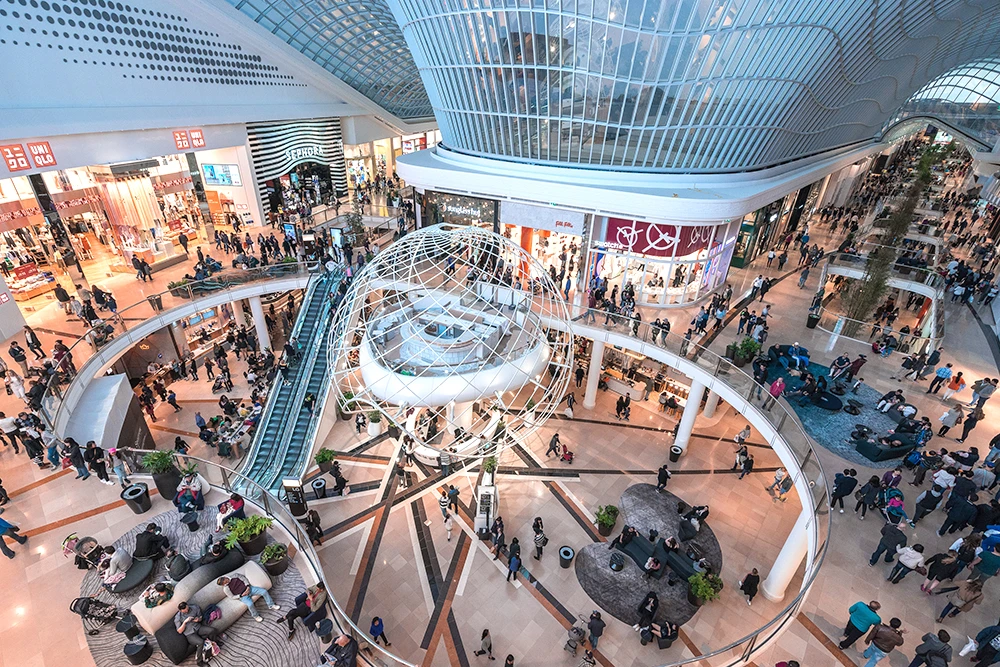
Aerial view of Chadstone shopping centre, surrounded by multiple levels of retail stores, escalators, and large crowds of shoppers throughout.

There's a generational shift coming that malls aren't fully prepared for

One of the more thought-provoking threads through the conference was around younger audiences — specifically how Gen Z and younger millennials actually use mall spaces.

The short version: they loiter. They hang around. They come in groups, spend time, and don't always buy something on that visit.

For a lot of mall managers, that's historically been seen as a problem. But the reframe that came through clearly at Malls of the Future is that this behaviour is actually brand-building in action. These are the customers of the next decade. A 17-year-old who spends Saturday afternoons at your mall because they feel welcome there is developing a relationship with your brand that a perfectly optimised conversion funnel can't replicate.

The malls that figure out how to design for this — creating spaces that genuinely welcome people rather than just tolerate them — are going to have a significant advantage.

We'll be back next year. We've already signed up for the same spot! If you want to talk about how better occupancy data fits into any of this — whether you're a mall operator, a retailer, or somewhere in between, let’s have a chat. 
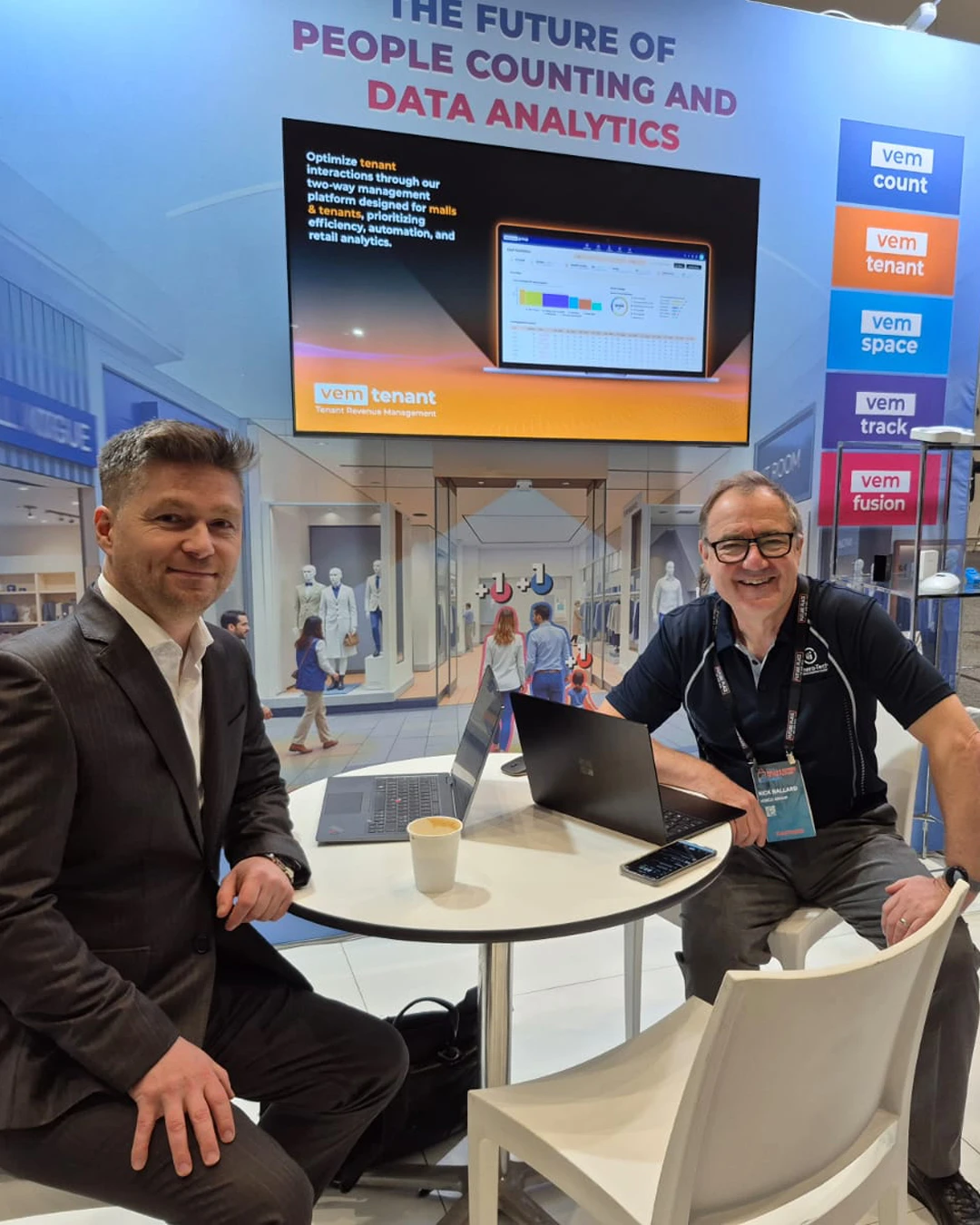
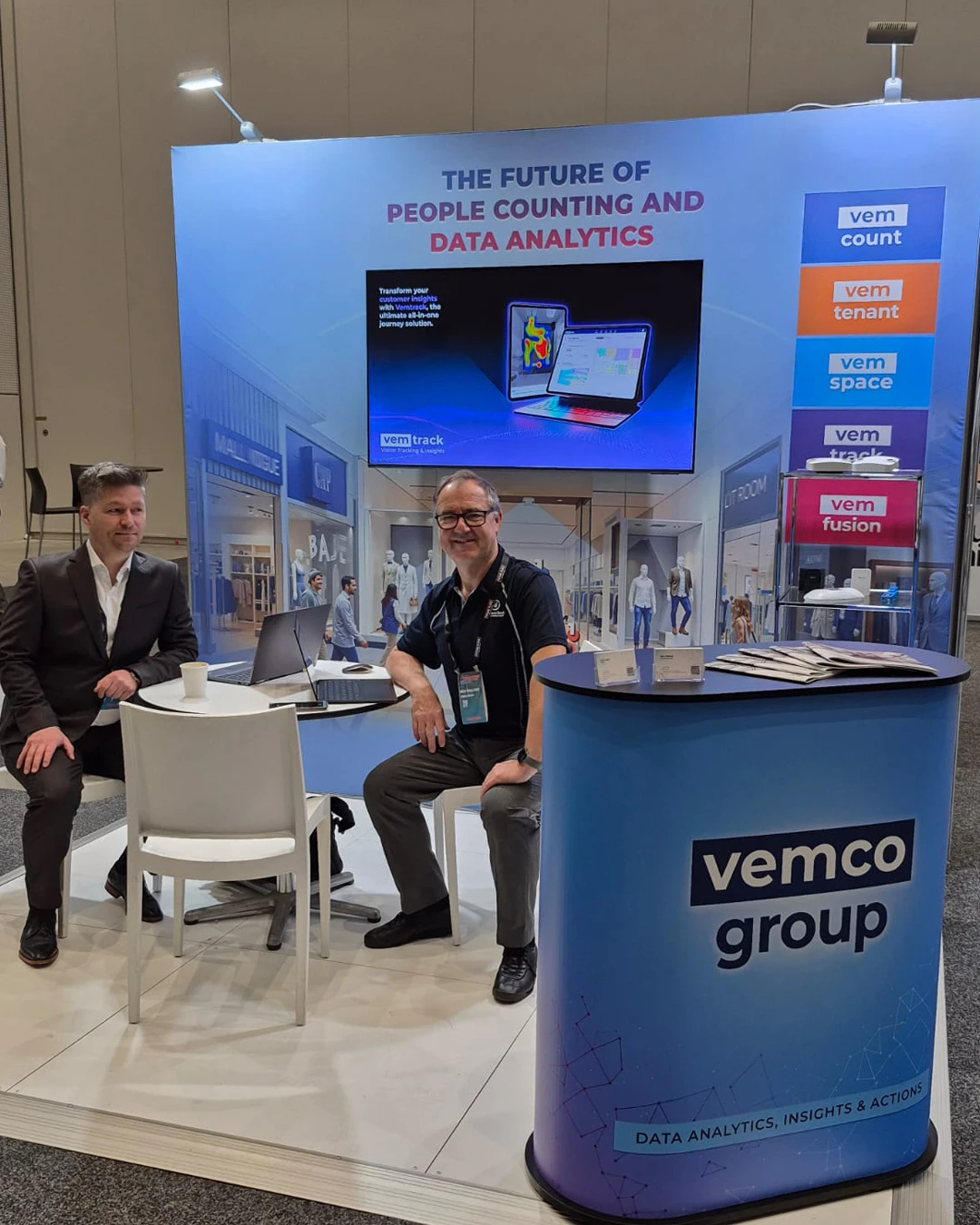
Two team members at the Cohera Tech exhibition stand at the Malls of the Future conference, with a large display screen showing "The Future of People Counting and Data Analytics".
The Cohera Tech exhibition stand at the Malls of the Future conference, showing the full booth setup with a display screen

No Faces. No Footage. No Risk | Cohera-Tech People Counting

Anonymous by Design: Australia's Biggest Privacy Tension

The use of people counting devices often raises questions about privacy. After years of headlines about facial recognition technology in retail — most recently Bunnings' drawn-out battle with the Privacy Commissioner — those questions are landing harder than ever on procurement teams, grant reviewers, and risk committees across Australia.

Which makes it a good time to be clear about something: the right people counting software has nothing to do with any of that.

The confusion is understandable — but it's costing organisations

Not all sensing technology is the same. Facial recognition technology captures biometric data. It identifies individuals. It creates records tied to real people. That's a fundamentally different proposition to knowing that 847 people moved through a doorway between 10am and 2pm on a Tuesday.

Cohera-Tech's non-intrusive people counting technology collects visitor data anonymously. It doesn't capture images. It doesn't recognise faces. It doesn't know who you are, what you look like, or whether you've been in this space before. Instead, our technology focuses solely on detecting and counting people without collecting biometric or personally identifiable information.. That's it.

Understanding customer behaviour is a legitimate operational need — libraries need to know which spaces are underused, leisure centres manage safe occupancy, shopping centres demonstrate foot traffic to tenants. None of these use cases require knowing who anyone is. The anxiety triggered by facial recognition headlines is real, but it shouldn't block adoption of technology that was never surveillance to begin with.

Blurred motion of shoppers moving through a busy multi-level shopping centre

Intrinsically anonymous vs. anonymised after the fact

This distinction matters enormously for risk and procurement teams. Some camera-based people counting systems claim privacy protection because they anonymise data after capture — blurring faces, deleting images post-processing. But the identifying information existed. It was captured. If the system were hacked or misused, it could be accessed.

Cohera-Tech's anonymous people counter works differently. Our overhead sensors use 3D depth mapping and thermal people counter privacy technology to detect shapes that match human dimensions, log a count, and move on. No image is ever formed. No biometric data is ever created. There is nothing to anonymise because there was nothing to capture in the first place.

This is why our technology is the right answer for organisations that need insights without exposure.

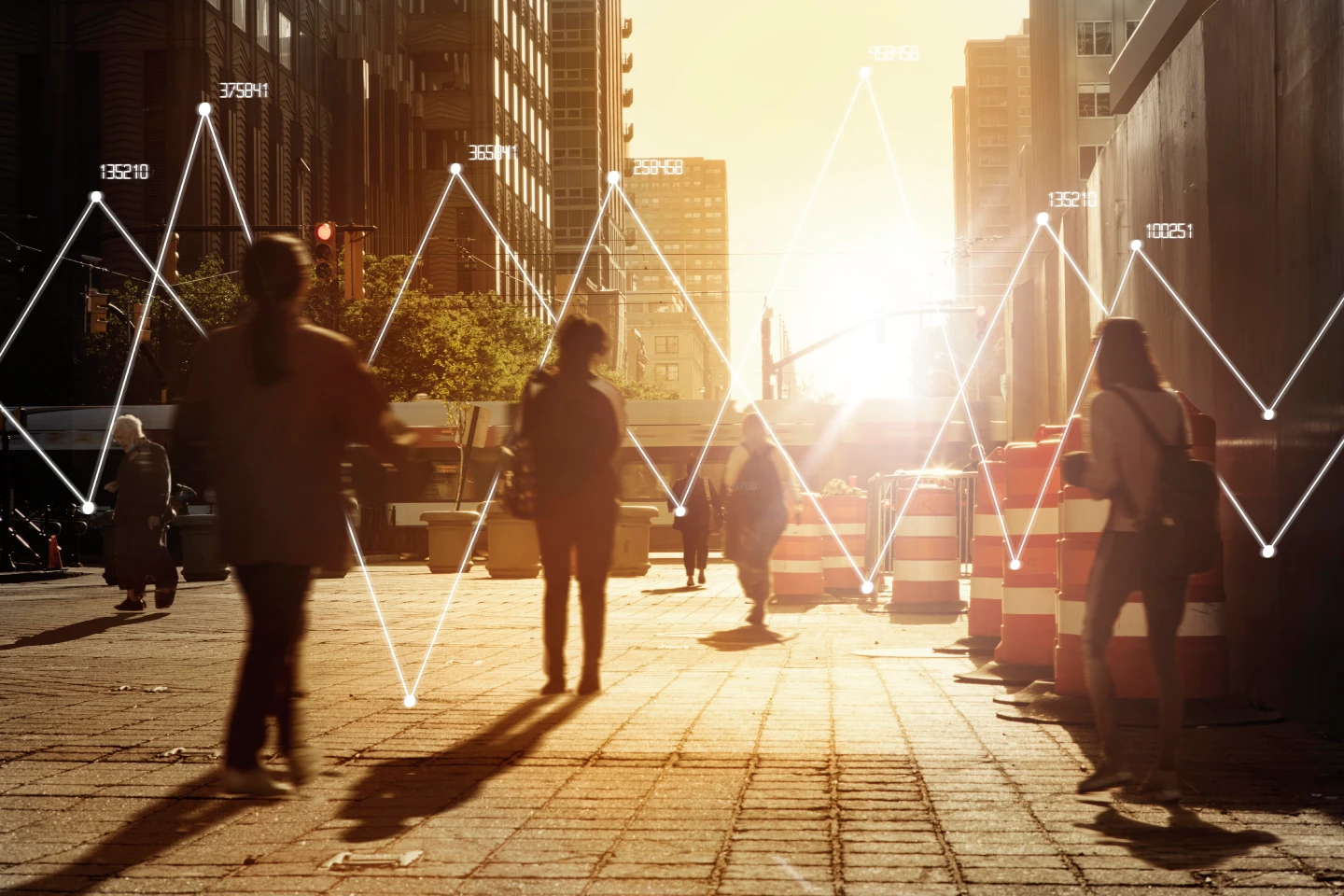
Pedestrians walking along a sunlit city street with overlaid data analytics graphics

Accurate data or no data — there's no middle ground

There's another issue with low-grade sensing technology that doesn't get talked about enough: it's often just wrong. Systems that can't reliably distinguish a person from a shadow, a trolley, or a passing reflection produce counts that are off by enough to matter. If your foot traffic data sits below 90% accuracy, you're not making informed decisions about customer behaviour — you're making expensive guesses.

This is where privacy compliance and data quality are actually the same argument. Cohera-Tech's 3D depth-sensing technology doesn't just avoid capturing biometric data — it's also far better at knowing what it's actually counting. Our Swiss-made sensors deliver a minimum of 96% accuracy, with most installations hitting 98–100%.

If you're currently running an older or lower-accuracy system, it's worth knowing how straightforward switching can be.

Built for compliance, not retrofitted for it

The VemCount platform powering Cohera-Tech's anonymous data and visitor tracking software is fully GDPR compliant — meeting the European Union's General Data Protection Regulation, one of the world's most rigorous privacy frameworks. No images or bio-data is captured. No footage is stored. Only logged numerical counts are encrypted and sent securely to our world class VemCount platform for reporting and analysis.

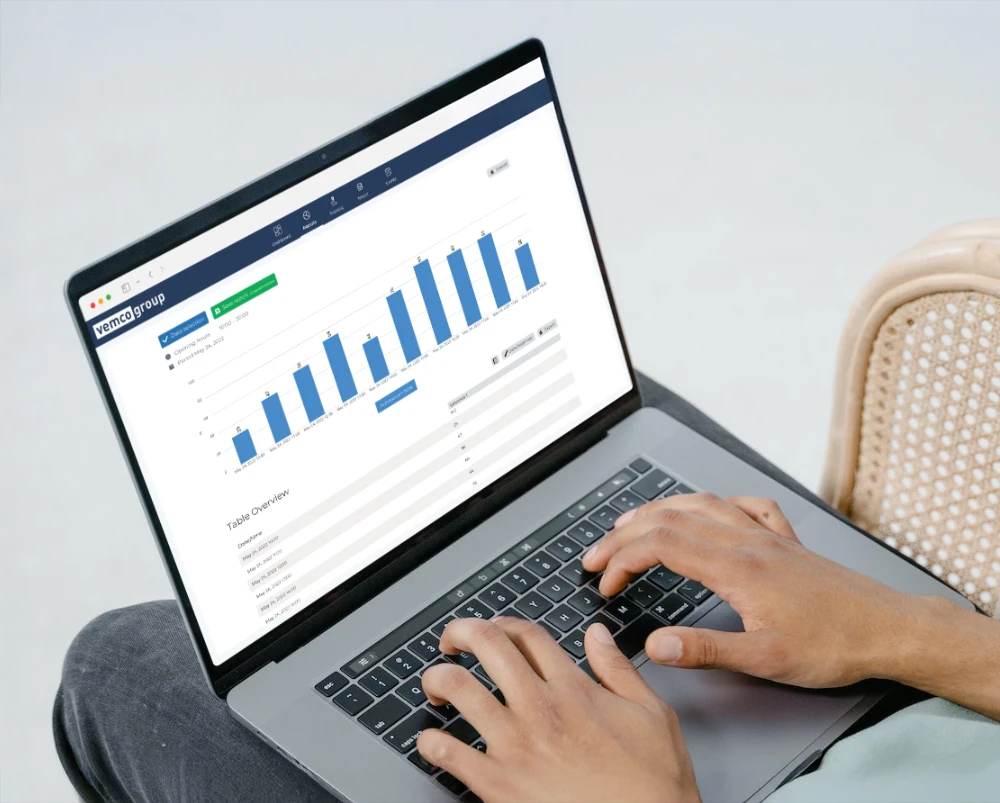
Laptop screen displaying the VemCount people counting analytics dashboard with bar charts and data table

For Australian organisations, this matters beyond current legal obligation. The Privacy Act is tightening. Community expectations around surveillance are hardening. Aligning with GDPR-grade compliance now means your procurement decision is defensible today and future-proofed for whatever comes next.

When a grant reviewer or board member asks how you've ensured this technology respects privacy, the answer isn't a policy document. It's architecture. The system cannot capture what it was never built to capture.

That's anonymous by design.

Want to understand how Cohera-Tech's privacy-compliant people counting software works for your venue? Let’s have a chat

Already Have People Counters? Here’s the Smarter Upgrade.

Thinking About Switching Your People Counting Software?

If you’re looking at people counting solutions in Australia, or trying to compare software, something’s probably bothering you.

Maybe subscription costs have crept up.
Maybe you’re being nudged to “refresh hardware”.
Maybe the dashboards feel stuck in 2014.

Here’s what we’re seeing across retail, public spaces, universities and commercial buildings:
It’s not always the sensors that are the problem. It’s the limitations of the service and software provider behind them.

This Isn’t About Buying New Devices

There are two very different scenarios when organisations consider switching:

  • The hardware is still performing well — but the platform isn’t.
  • The hardware and the reporting layer both need improvement.

The key is knowing which one you’re in.

We’re hardware-agnostic by design. If your existing sensors are still fit for purpose, we work with them. If they’re not, we replace them as part of a structured plan.

It’s not about selling hardware.
It’s about getting the infrastructure right.

And if upgrading sensors genuinely makes sense for your environment, we supply and install high-accuracy devices delivering up to 99% validated accuracy. For expert advice and support from day one, reach out to the team for a chat.

New Harris Scarfe storefront in Australia

A Real Transition: Harris Scarfe

Harris Scarfe recently transitioned 64 stores to the Vemcount platform. Not because their counters stopped working, but because they were reviewing hardware refresh cycles and subscription structures that no longer made commercial sense. They also wanted a platform that better supported the level of store traffic analytics the business relies on.

Rather than ripping out hardware, the rollout was staged by sensor type. Existing devices remained in place while a parallel data feed ran before final cutover. No downtime. No blind spots.

That’s the part most people miss when they’re wanting to know how to swap people counting software. Switching doesn’t automatically mean replacing infrastructure. Often, it simply means upgrading the backend.

If you’re wondering whether you need to upgrade your people counters to make a change, the answer is usually no.

As Kevin Ford, Director of Cohera-Tech, puts it:

“Organisations shouldn’t feel locked into legacy platforms simply because hardware is installed. Harris Scarfe’s transition shows that upgrading the backend can be controlled, staged and commercially sensible.”  Kevin Ford

Camberwell Place Shopping Centre and Silvershop have also transitioned from existing providers for similar reasons — commercial pressure, subscription creep, and limited reporting flexibility.

This shift is already underway across sectors, with more organisations reassessing long-standing hardware and platform decisions.

People counting dashboard displaying visitor analytics software metrics and store traffic data visualisation.

Protecting the Integrity of Your Data

Accuracy isn’t optional. It underpins staffing, compliance, space utilisation and commercial decisions.

When we transition a system, we don’t just switch dashboards. We validate the data. We recalibrate where needed. We review configurations that may not have been optimised in years.

If existing sensors are performing well, the raw data stream stays consistent. If hardware is underperforming, we upgrade it with modern, high-precision devices as part of a structured rollout.

The result isn’t risk. It’s stronger, validated store traffic analytics you can rely on.

Busy city intersection in Sydney with high pedestrian traffic illustrating real-world people counting environments.

The Bigger Shift Happening

This isn’t just about Harris Scarfe. Across sectors, we’re seeing the same mindset shift:

“I don’t want to be trapped by my last hardware decision.”

Many people counting solutions in Australia involve mixed device types. Locking all of that to a single proprietary backend creates unnecessary refresh cycles and inflated upgrade costs.

As a hardware-agnostic ecosystem, we decouple infrastructure from reporting. That means:

  • You protect your existing investment.
  • You improve the decision layer.
  • You avoid unnecessary rip-and-replace.
  • That’s what practical future-proofing looks like.
Retail shopping centre entrance in Brisbane City with customers entering and exiting stores for footfall measurement.

Global Platform. Local Accountability

Enterprise platforms promise scale, but what matters is reliability.

That means accurate calibration. Real validation. And someone local who understands your environment when something needs attention.

Cohera-Tech combines the global Vemcount platform with hands-on local support. Hardware when it’s needed. A flexible reporting ecosystem that adapts as you evolve. Ongoing monitoring that ensures your system performs long after installation.

Business leader speaking on phone while reviewing options for switching people counting software.

So, Should You Switch?

If everything’s humming, great. But if you’re comparing people counting software Australia-wide, questioning subscription structures, being nudged toward unnecessary hardware upgrades or wanting better visitor analytics software without breaking the bank, it’s worth knowing this:

Switching doesn’t automatically mean replacing hardware.

Sometimes it simply means upgrading the platform behind it.

And if a 64-store network like Harris Scarfe can transition without ripping out ceilings, the process is probably less dramatic than you’ve been led to believe.

If you want to sanity-check your current setup, reach out to the team. We’re happy to walk you through it.