Entries by Co.gency

From Gut Feel to Hard Data: A Guide to Foot Traffic Analytics

From Gut Feel to Hard Data: A Practical Guide to Foot Traffic Analytics

The shopping centre manager who knows exactly which entrance drives the highest capture rate on a Saturday morning negotiates leases differently. The gallery manager tracking visitor flow, plans venue staffing with confidence. The university facilities manager with two semesters of occupancy data, walks into a capital works committee with a winning argument, not a request.

Foot traffic analytics is what gives people an edge. In 2026, the gap between operators who use it and those who don't, is widening. This guide covers what foot traffic analytics actually is, how it works, what it measures, and what to look for in a people counting system.

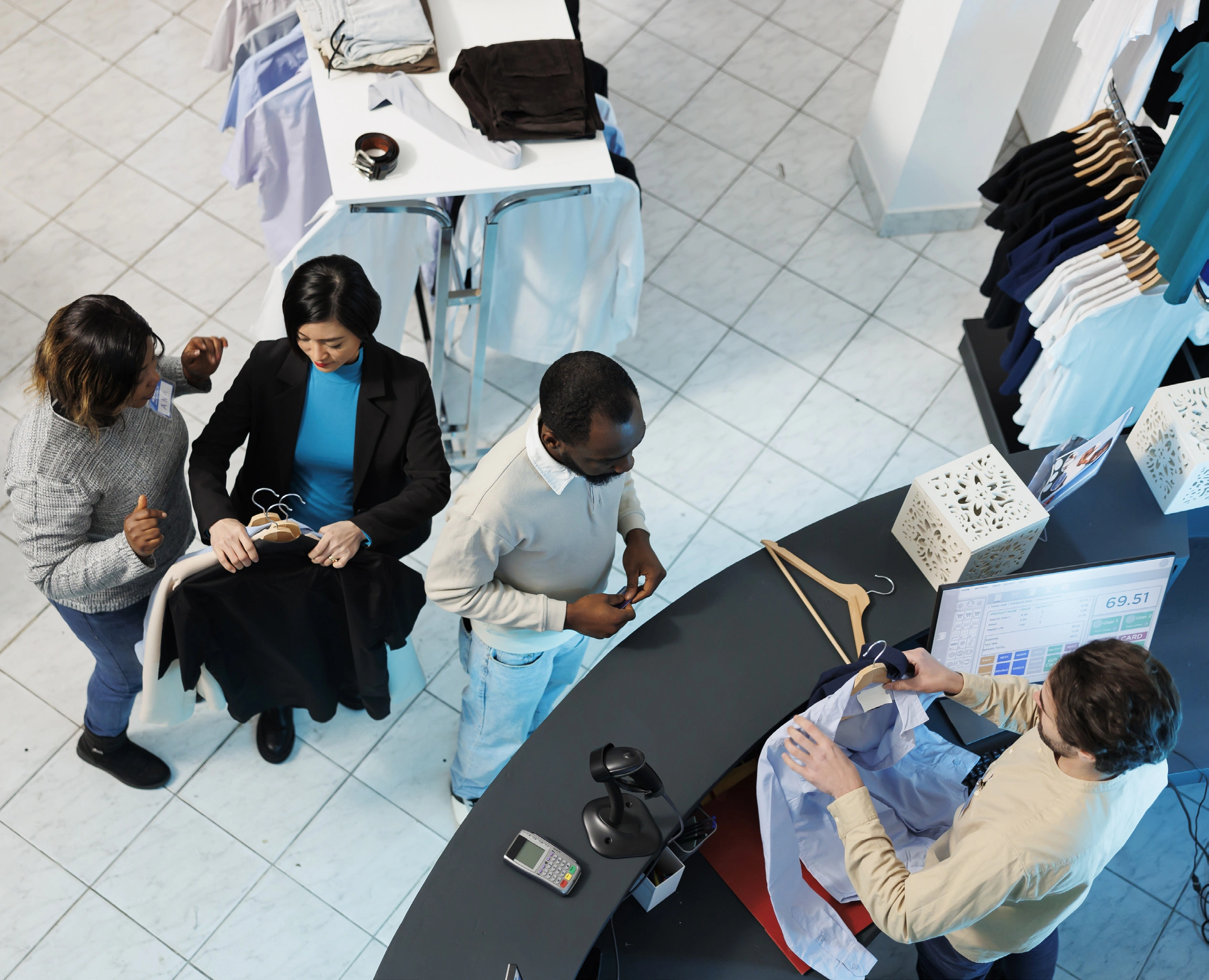
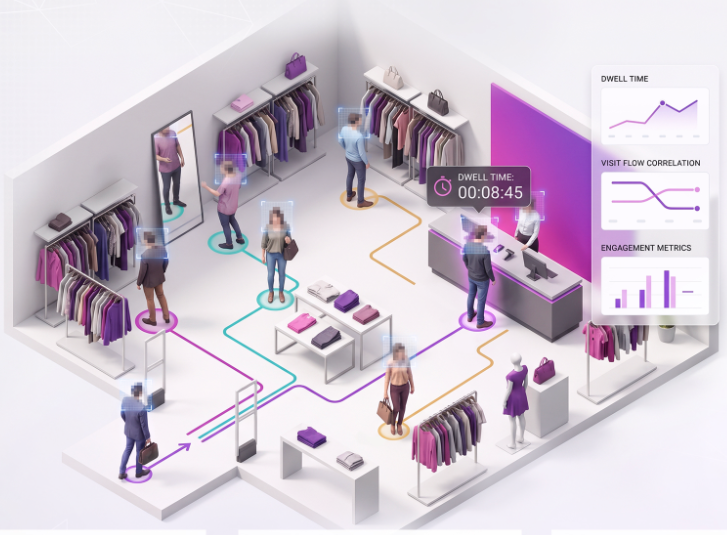
Overhead view of retail floor showing customer behaviour and foot traffic patterns

What is foot traffic analytics?

Foot traffic analytics is the process of collecting, analysing, and acting on data about how people move through a physical space. At its most basic, it answers "how many people came in today?" At its most sophisticated, it maps visitor journeys, identifies peak periods, measures how long people spend in specific zones, and connects that data to operational and commercial outcomes.

Modern people counting systems use a range of sensor technologies (overhead 3D stereoscopic sensors, thermal imaging, and AI-powered video analytics among them) to generate accurate, anonymous data at scale. The best systems provide visitor demographics information, handle complex entry configurations, and feed data into analytics dashboards that make the numbers useful.

Why it matters more now

If you manage a physical space in 2026, you're under pressure to justify it. Retailers need to prove a store is performing. Council managers need to demonstrate community facility usage to secure funding. University facilities teams need to show utilisation before capital works get approved. Shopping centre property managers need foot traffic data to benchmark tenants and hold their ground in lease negotiations.

The expectation from leadership, boards, and government is increasingly the same: show me the evidence. Foot traffic analytics gives you a deeper understanding of your environment, offering real-time insights into space utilisation and visitor trends.

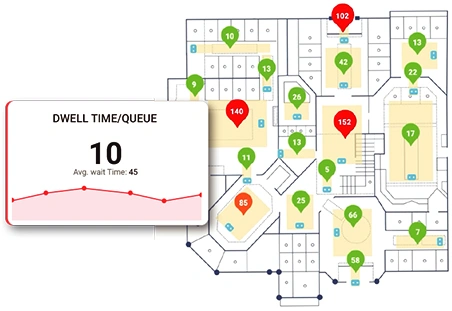
Commercial building floor plan with real-time dwell data and occupancy zones overlaid

What foot traffic analytics measures

Here's some examples of what a well-implemented people counting system puts in front of you:

  • Total visitor numbers: the baseline everything else builds from
  • Peak periods: when your space is busy and when it isn't
  • Capture rates: the share of passers-by who actually walk in
  • Dwell time: the average amount of time a visitor spends in a specific zone
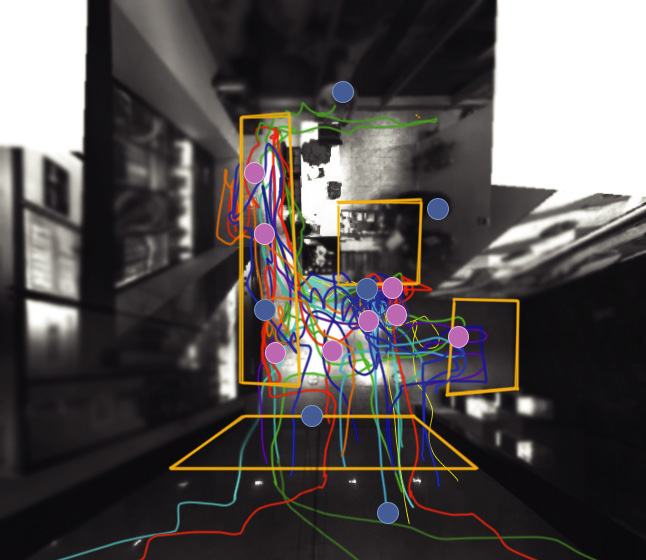
  • Visitor flow: the pathways visitors take through your space, visualised as tracking maps
  • Occupancy: real-time headcounts for compliance, safety, and energy management
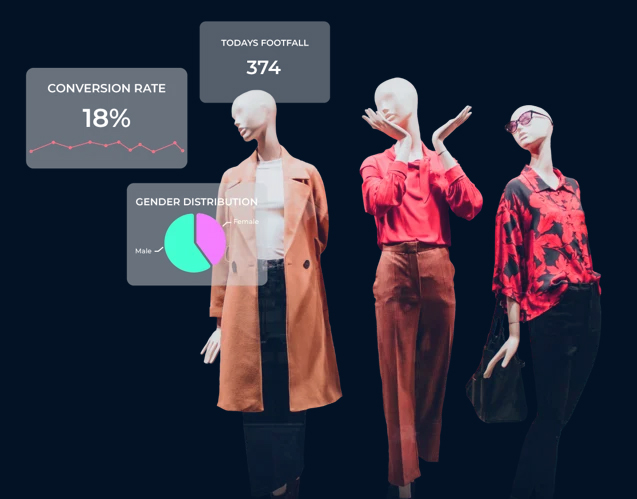
  • Conversion rate: the percentage of total visitors who make a purchase, a direct measure of sales team effectiveness
  • Demographic data: breakdown of visitors by age range and gender used for tailoring your offering
Foot traffic analytics sensor view showing real-time movement mapping in a building

How the technology works

There are a number of sensor technologies available. Three proven technologies Cohera-Tech deploys throughout the Australian market include:

3D Stereoscopic Sensors

  • What it is: This technology is considered the gold standard for high-accuracy people counting. Cohera-Tech confidently deploys premium options like the Xovis PF Series for major retail and public sector installations.
  • How it works: These overhead devices use dual lenses and 3D depth sensing to build a multi-dimensional view of an area. This allows them to accurately count individuals even in high-density environments. They easily handle tailgating, work reliably in changing light conditions, and can instantly tell the difference between a person and a shopping trolley.
  • How it can be used: They are ideal for high-footfall environments like busy retail entrances or shopping centres where precision is crucial.

AI-Powered Video Analytics

  • What it is: This technology uses advanced artificial intelligence to extract data from existing video feeds to study visitor habits.
  • How it works: The built-in AI engine processes facial features and body posture in real time. Without identifying individuals, it anonymises the data and classifies visitors into specific age ranges and gender demographics.
  • How it can be used: Managers use this to gain actionable, target-group insights. For example, a business can see the demographic makeup of visitor flows to tailor their product offerings to the people actually visiting the space.
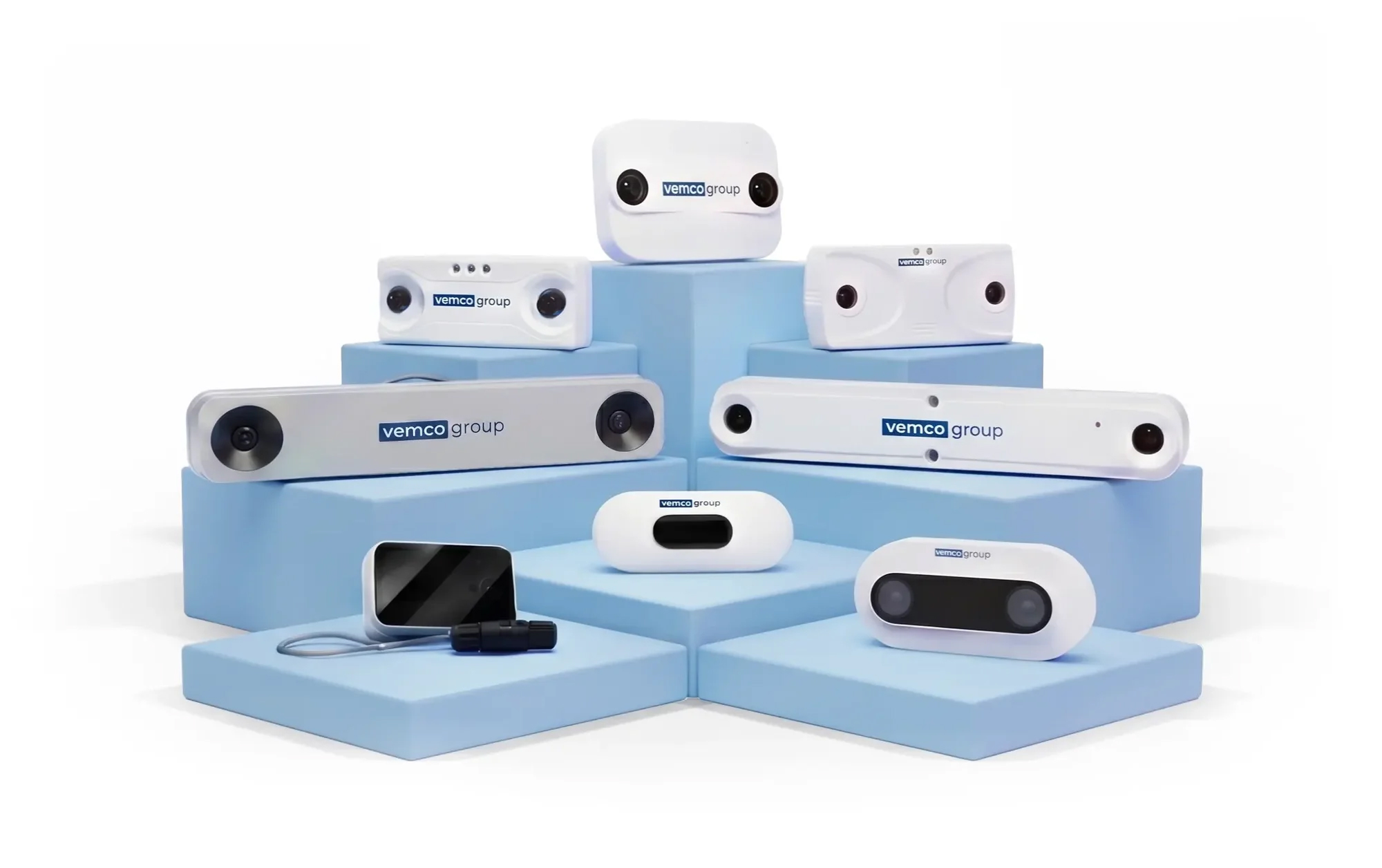
emco Group people counting sensor range for commercial building and retail occupancy management

IoT (Internet of Things) Sensors

  • What it is: These are smart, interconnected sensors designed to detect physical changes in an environment—such as motion, temperature, or sound.
  • How it works: Installed throughout smart buildings, these compact sensors convert everyday physical activity into actionable digital data. They provide continuous, real-time insights into exactly how different rooms and zones are being utilised.
  • How it can be used: Organisations use these sensors to track space utilisation across complex layouts like multi-room council buildings or university campuses. For instance, desk sensors detect occupancy to optimise office layouts and support hot-desking, while environmental sensors measure noise levels as a proxy for crowd density. When a room gets crowded, the system automatically signals the building's HVAC system to boost ventilation, maintaining air quality and occupant comfort while reducing energy waste.

Choosing the right technology depends entirely on your physical environment and what metrics you need to measure. A high-footfall retail entrance has vastly different requirements to a multi-room council building or a university campus. Sensor selection and placement are core parts of our consulting process, which is why getting that conversation right early ensures your data is useful from day one.

Retail analytics display showing conversion rate and transaction data overlaid on store mannequins


Privacy: the non-negotiable

In Australia, public sensitivity around surveillance technology is real and growing. Australians accept sensor-based counting when it's transparently deployed and clearly separated from facial recognition or identity tracking. The risk to operators who blur that line is both reputational and regulatory.

Cohera-Tech's systems are anonymous by design. That means no personally identifiable information is collected. No facial recognition. No biometric data. Compliance is built into the system architecture. Not bolted on afterwards.


Making the switch: what to look for and where to start

The technology has matured. The differentiator now is the partner behind it. Cohera-Tech's systems operate at 99%+, with site-specific installation expertise, and genuine local support after go-live.

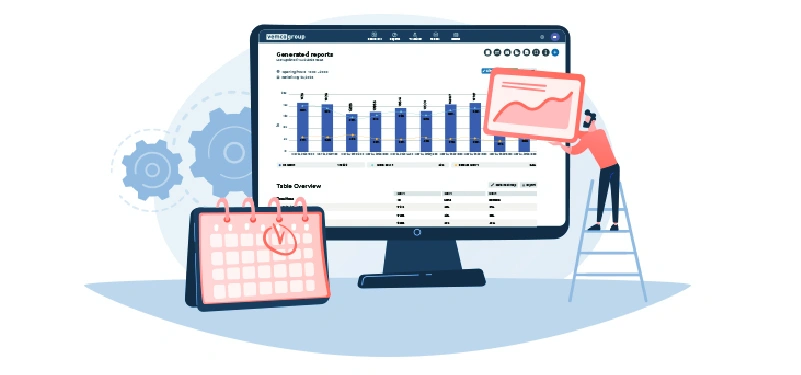
The analytics software matters too. We use the industry leading VemCount cloud reporting platform (via our partner Vemco Group) because it provides intuitive dashboards, scheduled reporting, and integrations with existing people counting systems. The goal is to make data usable, not to add another screen nobody checks.

Curious what solution from an experienced provider looks like? Get in touch with our team.

Beyond Counting: Re-ID is Transforming Space

Exciting News! 'People Flow' Tracking is Coming to VemCount

For years, one of the standard measures of a mall's performance was footfall. How many people came through the door? It's a very important number, but we always wanted to add more — like judging a restaurant by how many people look at the menu outside .

What we heard at Malls of the Future was a genuine shift in how operators are thinking. The conversation has moved from counting to understanding. How long did someone stay? Where did they go? Did they come back? These are the questions that actually tell you whether your space is working.

Dwell time isn't just a feel-good metric. For a mall, it's the difference between a visit that turns into one purchase and a visit that turns into three. For a retailer, it's the difference between someone glancing at a window display and someone who stays long enough to actually buy something. The industry knows this. What's exciting is that the tools to measure it properly are finally catching up.

People are finally talking about staying, not just arriving

The next chapter in people counting isn't actually about counting at all. For a long time, the only question that mattered in physical spaces was simple: how many people came in today?

At Cohera-Tech, we’ve spent the last twenty years helping organisations answer that exact question accurately, anonymously, and reliably. Our people counting software, powered by Vemco Group, is trusted in libraries, shopping centres, universities, galleries, and civic precincts across Australia and New Zealand. From Brisbane City Council's library network and the State Library of Victoria to the University of Melbourne's Smart Campus programme, we’ve built our reputation on solid numbers.

But that foundation is precisely what makes the next chapter so powerful. The conversation is shifting beyond basic footfall; operators are now asking who is visiting, for how long, and where did they go after that?

Illustrated cutaway of a retail store with shoppers browsing rails, showing the vemtrack Re-ID system mapping customer paths and feeding live dwell time and traffic data to an in-store dashboard.

Introducing Re-ID Technology

The next generation of people counting sensors incorporates a game-changing advancement: Re-ID (re-identification) technology.

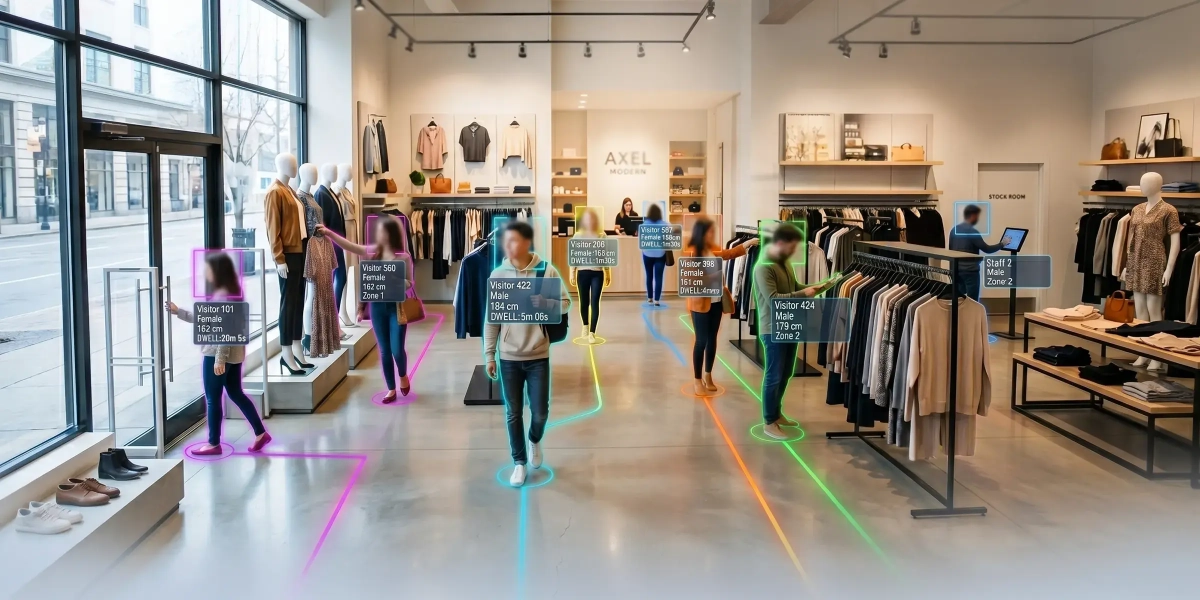
Using artificial intelligence, Re-ID recognises and tracks the same person across multiple sensors and large-scale areas. When a person enters a space, the sensor assigns them an anonymous, unique ID - think of it like a temporary placeholder. As that person moves between zones, the sensor network seamlessly hands them off, stitching their journey together into proper foot traffic analytics across your entire site.

The result is a complete picture of customer behaviour. Instead of just knowing "500 people visited the centre today," you unlock insights like: "People who entered through the south entrance spent an average of 14 minutes in the food precinct before heading to fashion." That is a fundamentally different kind of information, and a far stronger basis for making critical business decisions.

Bright, open clothing boutique with coloured lines on the floor showing customer journey paths, illustrating how Cohera-Tech sensors map movement and dwell zones in a real retail space.

What This Means for Your Space

How will this technology reshape operations across different industries?

Retail Environments: This is the difference between knowing your store was busy and knowing exactly which zones converted dwell data into sales. It gives brands the exact insights they need to optimise store layouts, staffing, and visual merchandising.

Shopping Centres: Our clients have long understood that tenant mix is everything. But until now, cross-shopping data has relied heavily on individual store reporting. Mapping entire journeys turns retail hunches into hard evidence.

Universities & Smart Campuses: Understanding how a space is utilised, zone by zone, is now central to occupancy software and capacity management software decisions. You can easily see which study areas are oversubscribed at 2pm, or where to allocate resources.

Public Spaces & Cultural Institutions: Re-ID gives operators the concrete evidence base they need for funding submissions, exhibition reviews, and long-range event planning.

Furthermore, Re-ID technology sharpens the demographic picture. Age and gender insights become vastly more reliable when they are tied to a continuous journey rather than just a split-second doorway snapshot — a feature retailers have been waiting on for a long time.

And Importantly: It's Still 100% Anonymous

While the insights are deeper, privacy remains uncompromised. The assigned ID is strictly temporary, the data is entirely non-identifying, and the system remains fully GDPR compliant. No faces are recorded, no images are stored, and no personal data is ever collected. Just movement, mapped properly. People counting was always a useful number; now, it's becoming a useful map.

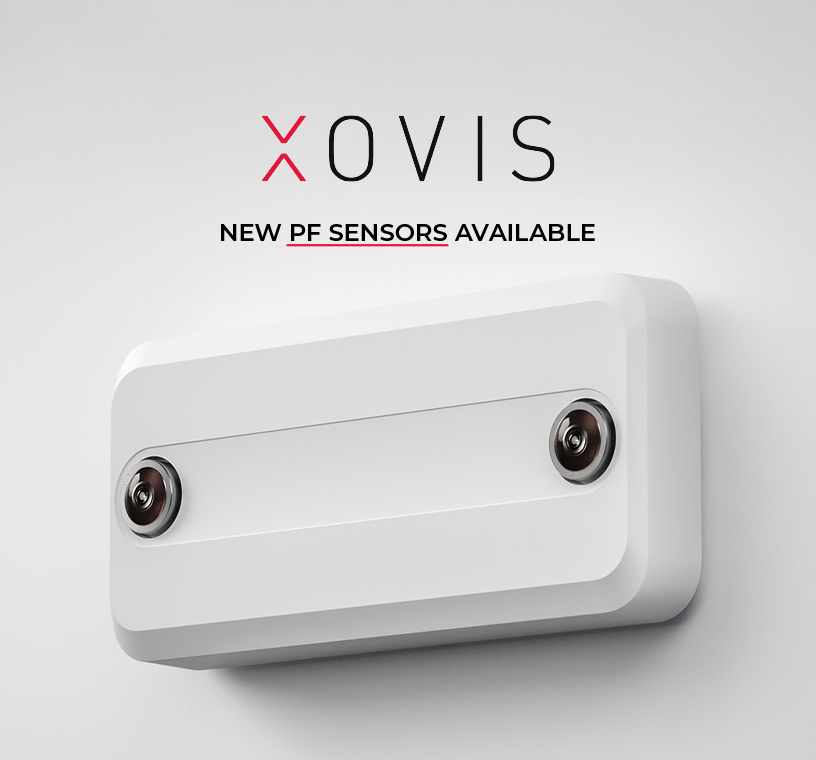
Close-up of the new Xovis PF people-counting sensor

Available Now

You don’t have to wait for the software update to start upgrading your infrastructure. Cohera-Tech has recently introduced the latest advancement in hardware to our product range: the cutting-edge Xovis PF-Series (featuring the new Xovis PF sensor).

As our premier Re-ID capable sensor, it is engineered with advanced edge-AI specifically designed for precision tracking in large-scale environments. By deploying this innovative hardware today, you will be fully prepared to activate VemCount's 'people flow' reporting the moment the software integration drops.

Curious What Your Space Could Tell You?

Whether you are an existing Cohera-Tech client looking to get more from your current people counting system, thinking about making the switch, or looking to upgrade to the new Xovis PF-Series with built-in Re-ID, we would love to walk you through what this evolution means for your environment. Get in touch with us today.